English
  Arabic
  Spanish
  Russian
  Chinese
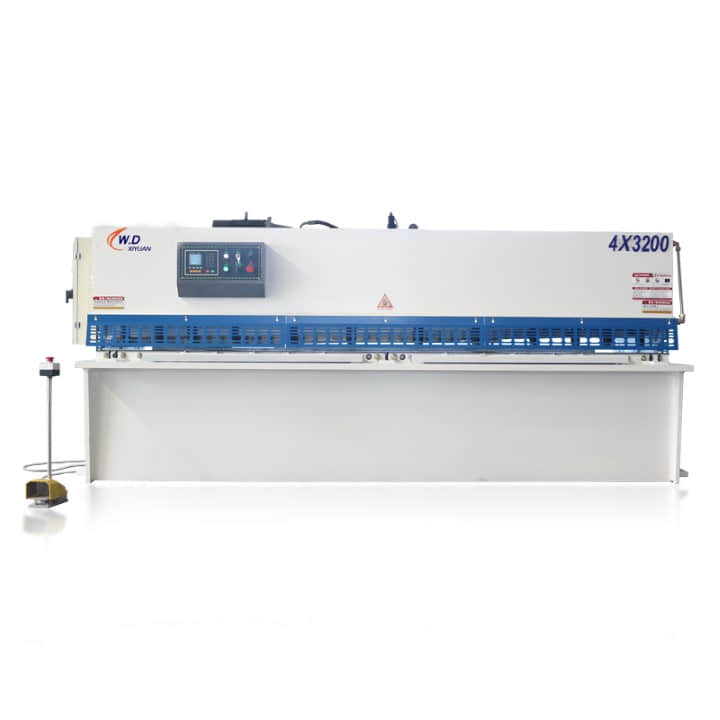
A swing beam shear is a type of mechanical shearing machine widely used in metalworking industries for cutting sheet metal, plates, and other materials with precision. Known for its efficiency and versatility, this tool plays a crucial role in both small and large-scale fabrication operations.
1. Introduction to Swing Beam Shears
This machine is designed to cut metal sheets into straight lines using a unique hinged or swinging upper blade. Unlike fixed-blade machines, the swinging blade moves in a circular arc, allowing the shear to handle thicker, stronger materials with the precision required in modern manufacturing. They are commonly used in industries like automotive, aerospace, construction, and HVAC for tasks such as preparing metal sheets for welding, bending, or further processing.
By using this machine, manufacturers can achieve high-quality cuts in a variety of materials, ensuring the efficiency of their production processes.
Key Features of a Swing Beam Shear:
- Swinging Blade Mechanism: The most distinguishing feature of this shear is the swinging upper blade, which provides a shearing action that reduces distortion in the workpiece.
- Precision Cutting: With adjustable back gauges and a strong, durable cutting edge, they can achieve cuts with high accuracy.
- Hydraulic or Mechanical Operation: Modern swing beam shears typically operate using hydraulic power, but mechanical models can also be found.
- Versatility: Suitable for cutting materials of varying thicknesses and widths, making it a versatile tool for different applications.
2. The Components of a Swing Beam Shear
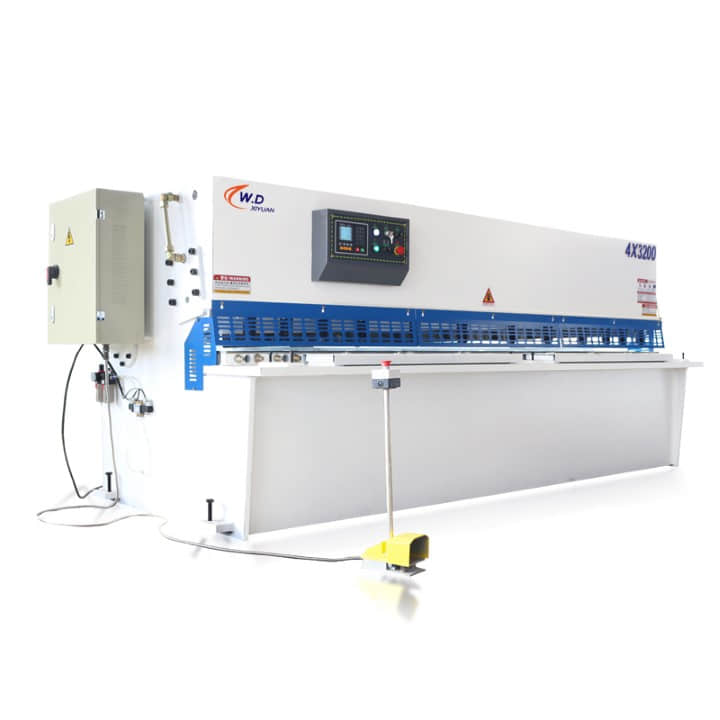
Understanding the function of a swing beam shear requires a clear view of its key components, as they all play a vital role in the cutting process. Below is a breakdown of the main components of this machine:
a) Upper Blade
The upper blade, or swing blade, is the key component of it. This blade is mounted on a hinge, allowing it to swing in a circular arc during the cutting process. The blade is typically made from high-quality steel or carbide for durability, and its angle can often be adjusted to optimize cutting performance depending on the material being sheared.
b) Lower Blade
The lower blade is stationary and positioned beneath the material being cut. It is mounted securely to the machine bed, providing a stable surface for the sheet metal as the upper blade swings down to make the cut. Like the upper blade, the lower blade is made from hardened steel or another durable material that can withstand the pressure exerted during shearing.
c) Swinging Mechanism
The swinging mechanism is what distinguishes the swing beam shear from other types of shears. It consists of a hinged pivot point located at the rear of the upper blade. This mechanism allows the upper blade to swing down in a controlled arc to shear the material. The speed, range, and force of the swinging motion can be adjusted, depending on the desired cut and material thickness.
d) Hydraulic System
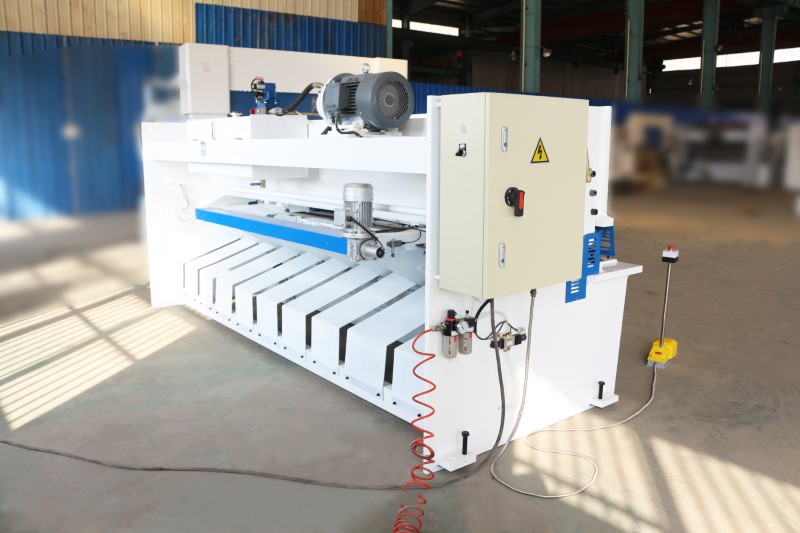
Most modern swing beam shears are powered by hydraulic systems that provide the necessary force to drive the swinging motion of the upper blade. The hydraulic system typically includes a hydraulic pump, cylinder, valve, and hoses. The hydraulic force ensures smooth and precise operation, enabling the machine to cut through thick metal sheets with minimal distortion.
e) Back Gauge
The back gauge is an adjustable component that helps position the metal sheet accurately for the cut. It is typically located at the rear of the machine and is adjustable in both vertical and horizontal directions. The back gauge ensures that each cut is made at the desired position, allowing for repeatable, consistent cuts. It is particularly useful when making multiple cuts of the same length.
f) Hold-Downs
Hold-downs are devices that apply pressure to the material being cut, preventing it from shifting during the cutting process. This ensures a clean, accurate cut, reducing the risk of warping or movement that can result in inaccurate dimensions.
g) Control Panel
The control panel of a swing beam shear allows the operator to set various parameters, including the blade position, cutting speed, and stroke length. In advanced models, the control panel may feature a digital interface for more precise adjustments and automation features, including programmable cut sequences and automatic back gauge positioning.
3. How Does a Swing Beam Shear Work?
The machine operates using a combination of hydraulic or mechanical power, with the swinging upper blade providing the cutting action. Here’s a step-by-step explanation of its operation:
Step 1: Material Placement
The first step is to position the sheet metal on the bed of the shear. The operator typically uses a crane or forklift to move large sheets into place. The material is positioned against the back gauge, ensuring it is aligned correctly for the cut.
Step 2: Adjusting Settings
The operator sets the required parameters on the control panel, such as the blade clearance (the distance between the upper and lower blades), cutting speed, and back gauge position. For more precise cuts, the back gauge is adjusted to ensure the correct length for the cut.
Step 3: Blade Activation
Once the settings are configured, the hydraulic system or mechanical drive activates the swinging mechanism. The hydraulic cylinder generates force, causing the upper blade to swing downwards in a controlled arc. The upper blade makes contact with the sheet metal, shearing it against the stationary lower blade.
Step 4: Material Cutting
As the upper blade swings through the material, it shears the metal sheet. The force exerted by the upper blade is distributed evenly across the cutting edge, ensuring a smooth, clean cut with minimal distortion. The material is typically cut along a straight line, but the precision of the shear allows for various angles and lengths as required.
Step 5: Repeat or Reset
Once the cut is made, the operator may reposition the material for the next cut, using the back gauge to ensure accuracy. If multiple cuts are required, the machine will continue the shearing process based on the programmed settings, ensuring consistency across all cuts.
Step 6: Finished Product
After all the cuts are made, the finished pieces are removed, typically using a crane or manually, depending on the size of the material. The cut pieces are ready for further processing, such as bending, welding, or assembly.
4. Advantages of a Swing Beam Shear
A swing beam shear offers several advantages over other types of shearing machines, making it a preferred choice in many industries. These benefits include:
a) High Cutting Precision
The swinging mechanism of the upper blade allows for precise cuts with minimal material distortion. This precision is critical in industries where accuracy is essential, such as in the production of automotive parts or high-precision metal components.
b) Handling of Thick Materials
They are designed to handle thicker materials than many other types of shearing machines. The robust swinging action and hydraulic power enable them to cut through sheets of metal with greater thickness and hardness, making them suitable for a wide range of materials, including stainless steel and aluminum.
c) Reduced Material Waste
The precision of the swing beam shear means that material waste is minimized. With accurate cuts, there is less chance of errors, which reduces scrap and increases overall material efficiency.
d) Versatility
They can be used for a variety of materials, including mild steel, stainless steel, aluminum, and even non-metallic materials. The machine’s adjustable settings make it adaptable to different thicknesses and sheet sizes, making it a versatile tool in the fabrication process.
e) Low Maintenance and Durability
With its robust construction and durable components, a swing beam shear typically requires less maintenance compared to other machines. The high-quality steel blades and hydraulic systems are designed to withstand the stresses of cutting operations, ensuring a long operational lifespan.
f) Safety Features
Modern swing beam shears are equipped with a range of safety features to protect operators. These include emergency stop buttons, protective shields, and sensors that ensure the machine operates within safe parameters. These safety features are vital in preventing accidents and injuries in industrial settings.
5. Applications of Swing Beam Shears
They are used in a wide variety of applications, including:
- Sheet Metal Fabrication: They are commonly used in the fabrication of sheet metal parts for various industries, including automotive, aerospace, and construction.
- HVAC Ductwork: They are ideal for cutting metal sheets used in heating, ventilation, and air conditioning systems.
- Steel Processing: They are employed in steel processing plants to cut large sheets of steel into more manageable sizes.
- Pipe and Tube Manufacturing: These shears are also used in cutting metal tubes and pipes into required lengths.
Conclusion
A swing beam shear is a powerful and versatile machine used for cutting sheet metal and other materials with high precision. Its unique swinging upper blade mechanism allows it to handle thicker materials, while the precision and efficiency it offers make it a critical tool in many manufacturing and fabrication operations. By understanding how they works and the advantages it provides, businesses can make informed decisions about incorporating this tool into their production processes, ultimately improving efficiency, accuracy, and material usage.
Related Products